
Refrigerators have become highly differentiated appliances, with variations in storage architecture, cooling technology, energy performance, dimensions, and market-specific requirements. For buyers evaluating a China refrigerator brand, the more meaningful question is often how consistently the manufacturer can translate engineering capabilities into products suited to different households and regions.
International reach adds another layer to that assessment because climate conditions, regulations, kitchen layouts, and consumer habits vary widely. Against this background, Homa Appliances has built its refrigeration business around global customers, with the company reporting service coverage in more than 150 countries and cumulative sales exceeding 150 million units.
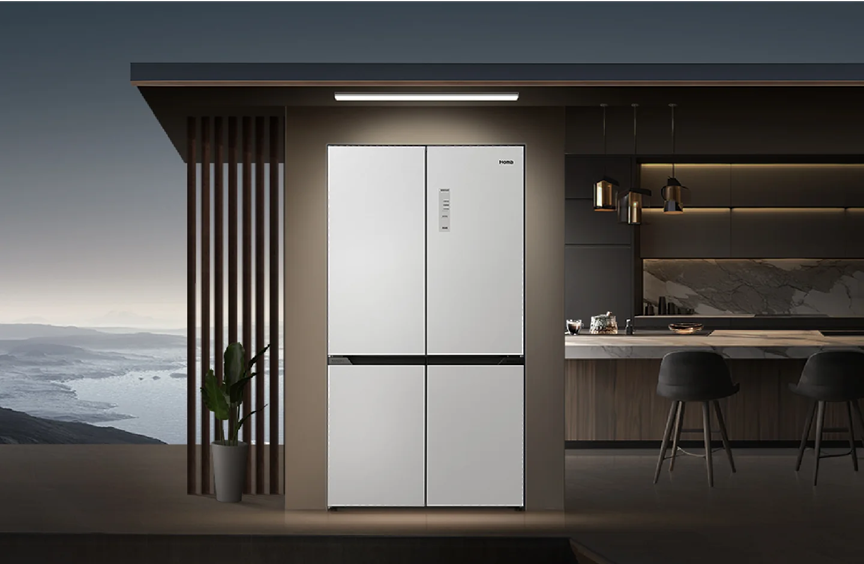
Beyond Appearance: What Defines Refrigerator Quality?
Exterior design may influence the first impression, but refrigeration performance depends on systems hidden behind the cabinet. Compressors, evaporators, condensers, insulation, door seals, controls, and airflow arrangements all contribute to temperature management. A visually appealing appliance still needs these components to work together effectively.
Cabinet construction deserves attention because heat naturally moves from warmer surroundings toward colder spaces. Insulation reduces this transfer, while effective door sealing helps limit air leakage and the entry of warm, humid air. Such details can affect how frequently the cooling system needs to operate.
Storage design adds another practical dimension. Shelf spacing, drawer placement, freezer allocation, and door compartments determine how easily users can organize different foods. Usable capacity can therefore matter more than the headline volume shown in a product listing.
Why Manufacturing Experience Matters
Production capability extends well beyond assembling individual components. Refrigeration manufacturing involves component sourcing, quality inspection, testing, process control, packaging, and logistics. Each stage can influence the consistency of the finished appliance.
International markets introduce additional variables. Electrical requirements, climate classifications, energy regulations, labeling rules, and preferred cabinet dimensions may differ between regions. Manufacturers serving several markets need processes that can accommodate such variations without losing control over product specifications.
Long-term manufacturing experience can also support product development. Feedback from different markets provides useful information about common usage patterns, preferred configurations, and practical problems encountered after installation. Such knowledge can influence future refrigerator designs.
How The China Refrigerator Brand Landscape Has Changed
The development of China’s refrigerator industry reflects a broader shift from manufacturing primarily for domestic demand toward serving increasingly diverse international markets. Refrigerators are now available in formats ranging from top-mount and combi designs to side-by-side, multi-door, built-in, upright, and chest-freezer configurations.
Technology has evolved alongside this product diversity. No-frost cooling, electronic controls, specialized storage compartments, LED illumination, holiday settings, and door alarms address different aspects of everyday use. However, adding more functions does not automatically create a better appliance; relevance and usability remain important.
Market segmentation has become equally significant. Compact kitchens may require different cabinet proportions from large family homes, while commercial or rental applications can involve different priorities altogether. Product portfolios consequently need enough variation to reflect real differences in space and usage.
How Global Distribution Shapes Product Development
Export-oriented refrigeration production requires attention to transportation as well as appliance performance. Cabinet dimensions, packaging structure, loading efficiency, and shipping conditions all influence how products move from factories to overseas markets.
After-sales considerations matter too. Replacement parts, technical documentation, warranty processes, and service networks can influence the long-term ownership experience. These factors may receive less attention during an initial purchase, yet they become important once products are distributed across multiple countries.
Consumer expectations also change between regions. Color preferences, freezer-to-refrigerator ratios, installation methods, and preferred capacities can vary significantly. Manufacturers that understand these differences can develop more appropriate configurations rather than assuming that one design will suit every market.
Assessing A Refrigerator Partner More Carefully
A useful evaluation begins with measurable information. Buyers can examine dimensions, net capacity, cooling type, energy-related specifications, controls, safety features, and available configurations before comparing suppliers. Technical documentation provides a clearer basis for assessment than promotional language alone.
Manufacturing scale is another consideration, but it should be viewed alongside development capabilities and international experience. Consistent production requires coordinated processes, while successful market adaptation depends on understanding the requirements surrounding each product.
Homa’s official company information states that its cooling products are supplied to customers in more than 150 countries, with cumulative sales exceeding 150 million units. The company also reports 17 consecutive years as China’s No.1 refrigerator exporter. These figures provide context for understanding its export-oriented manufacturing experience, although individual products should still be assessed through their own specifications and intended applications.
Conclusion
Refrigerator quality cannot be reduced to one specification or visual feature. Cooling architecture, insulation, storage usability, manufacturing control, regional adaptation, and long-term service considerations all contribute to the value of an appliance. Buyers researching the China refrigerator brand market can therefore gain more useful insights by examining technical information and manufacturing capabilities together. With its international customer base and long-standing focus on cooling products, Homa Appliances occupies a distinct position within China’s export-oriented refrigeration industry, offering a broader perspective on how modern appliance manufacturing responds to global market needs.
