
Factory automation is now a supply-chain metric: for a potential refrigerator manufacturer, digital infrastructure and assembly-floor technology decide how consistently it holds tolerances across large-volume orders. For international brand managers and wholesale buyers, evaluating automation depth now means reviewing production data, traceability systems, and defect rates rather than brochure specifications.
Today’s B2B procurement contracts call for batch consistency, fast scalability, and transparent quality metrics—capabilities that come from implementing Industry 4.0 protocols and intelligent manufacturing systems.
Automated Metal Forming and Insulation Precision
The structural integrity and thermal efficiency of a cooling appliance are set during the early stages of fabrication. Modern smart factories use fully automated, computer numerical control (CNC) metal stamping lines to form outer cabinets and doors. This industrial automation can improve process repeatability and help maintain more consistent panel dimensions across high-volume production.
In addition, injecting polyurethane insulation foam is a delicate process that can affect the appliance’s thermal performance and energy efficiency. Advanced manufacturing facilities use robotic injection systems with real-time viscosity and temperature sensors. These automated nozzles can help achieve more even foam distribution inside the cabinet walls and reduce the risk of thermal voids. For the wholesale buyer, consistent insulation quality can help maintain the intended thermal performance of the finished appliance and support compliance with applicable energy-efficiency requirements. This consistency matters because even small thermal voids can compound across thousands of units, dragging down average energy test scores.
Digital Traceability and Component Tracking
In high-volume international sourcing, risk mitigation is critical. If a component defect is found after shipment, procurement teams need immediate, detailed data to isolate the affected batch. Intelligent manufacturing environments handle this by integrating end-to-end digital traceability through advanced Manufacturing Execution Systems (MES).
From the moment a compressor or electronic control board arrives at the factory, it is logged using laser-etched barcodes or RFID tags. As these parts move down the automated assembly line, optical scanners record their exact placement in specific appliance chassis. This creates a complete digital record for every refrigerator produced.
If an international brand needs to audit a specific production run, the manufacturer can instantly retrieve the digital history of the shipment, identifying the exact origin and installation time of every critical sub-assembly. This level of transparency gives institutional buyers a strong layer of operational security and simplifies aftermarket warranty management.
This detailed component-level record-keeping also supports streamlined compliance reporting. When regional authorities require product documentation for import clearance, suppliers can use relevant digital records to support documentation and traceability requirements.
Lean Intralogistics and Lead Time Optimization
Filling large-scale B2B procurement contracts on tight seasonal timelines requires flawless internal logistics. Traditional factory layouts often face bottlenecks in component transport, leading to delayed assembly and missed shipping windows. To fix this, established manufacturers have overhauled their internal logistics using Automated Guided Vehicles (AGVs) and optimized cellular manufacturing layouts.
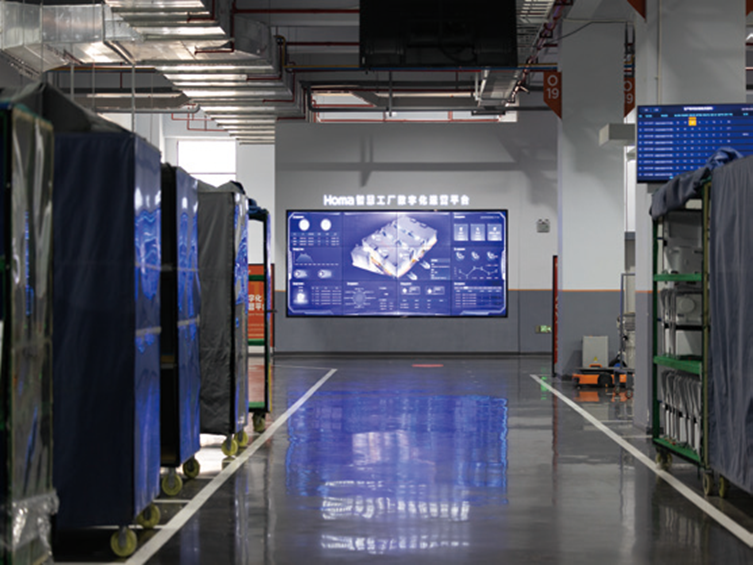
These autonomous robotic transport systems move around the factory floor using LiDAR and floor-embedded sensors, delivering precise quantities of raw materials-like glasss helving, copper tubing, and plastic door bins-to the assembly line exactly when needed.
This internal Just-In-Time (JIT) delivery system prevents floor clutter and cuts assembly downtime. For procurement managers, a supplier’s investment in automated internal logistics directly means shorter production lead times and predictable vessel loading schedules, supporting inventory arrives in sync with seasonal retail promotions. It also reduces the risk of production bottlenecks caused by delayed component deliveries, since materials arrive exactly when the line needs them.
Machine Vision and Algorithmic Quality Control
The final stages of production are arguably the most critical for international wholesale buyers, since shipping defective units across oceans creates huge logistical and reputational costs. Traditional end-of-line inspections depended on human visual checks, which are prone to fatigue and mistakes. Today, thorough quality assurance at high-capacity plants increasingly relies on machine vision systems run by automated algorithms, a shift visible across major operators such as Homa Appliances.
High-definition optical arrays scan the exterior of each completed unit, catching microscopic paint blemishes, misaligned door gaskets, and incorrect badge placements that a human inspector might overlook.Automated refrigerant-charging systems can meter the specified amount of refrigerant required for each appliance model. By automating selected inspection tasks, intelligent factories can improve inspection consistency while retaining human judgement for quality decisions.
The modernization of global appliance assembly lines has fundamentally changed the criteria for choosing a reliable production partner. Going beyond basic capacity metrics, successful overseas procurement now depends on a factory’s integration of robotics, digital traceability, and automated quality control.
By prioritizing suppliers that have successfully moved to intelligent manufacturing frameworks, international brands and institutional buyers can substantially reduce batch variance and gain predictable production timelines. Consistency at that level is what makes global distribution networks practical to scale and regional quality standards easier to hold.
